How To Buy Gold Safely In 2026: A Complete Guide
Gold prices have surged to record highs in early 2026, driven by global economic shifts and a renewed search for inflation hedges. For many investors, physical gold remains the ultimate “safe haven” asset. However, as demand grows, so does the sophistication of scams and the risks of purchasing counterfeit or poorly-sourced material.
Buying gold is as much about buying trust as it is about the metal itself. Whether you are a first-time buyer looking for a few coins or a wholesale investor moving larger volumes, navigating the market requires a disciplined approach to security, verification, and sourcing.
Understanding your options: coins, bars, and ETFs
Before you part with your capital, you must decide which form of gold best suits your investment goals. Each carries different implications for liquidity, premiums, and storage.
Investment Type | Best For | Pros | Cons |
|---|---|---|---|
Gold Bullion Bars | Large-scale wealth preservation | Lowest premiums over spot price; easy to store in bulk. | High entry cost; harder to “split” if you need quick cash. |
Gold Coins | Portability and “spending” | Recognized legal tender; easy to liquidate in small amounts. | Higher premiums than bars; can be faked if not from major mints. |
Gold IRAs | Retirement savings | Tax-advantaged growth; professionally vaulted. | Annual fees; you cannot personally hold the gold at home. |
Gold ETFs | Quick trading | High liquidity; no storage worries. | No physical ownership; you are betting on a price index. |
For those prioritizing safety, physical gold (bars and coins) is often preferred because it removes “counterparty risk”-the danger that the institution holding your “paper” gold might fail.
Choosing a reputable dealer
The most critical step in a safe gold purchase is the selection of your dealer. In 2026, the digital landscape is crowded with slick marketing that can mask unreliable operations.
Check the Track Record: Look for dealers who have been in business for at least a decade. Companies like APMEX or JM Bullion are industry staples, but newer regional hubs are also emerging.
Verify Industry Memberships: A reputable U.S.-based dealer should be a member of the Professional Numismatists Guild (PNG) or the Industry Council for Tangible Assets (ICTA).
Use the NFA BASIC Tool: For dealers offering Gold IRAs or futures, check their status via the National Futures Association (NFA) BASIC tool.
Audit the Reviews: Don’t just look at the star rating on their own site. Check the Better Business Bureau (BBB) for formal complaints and how they were resolved.
The verification checklist: how to spot real gold
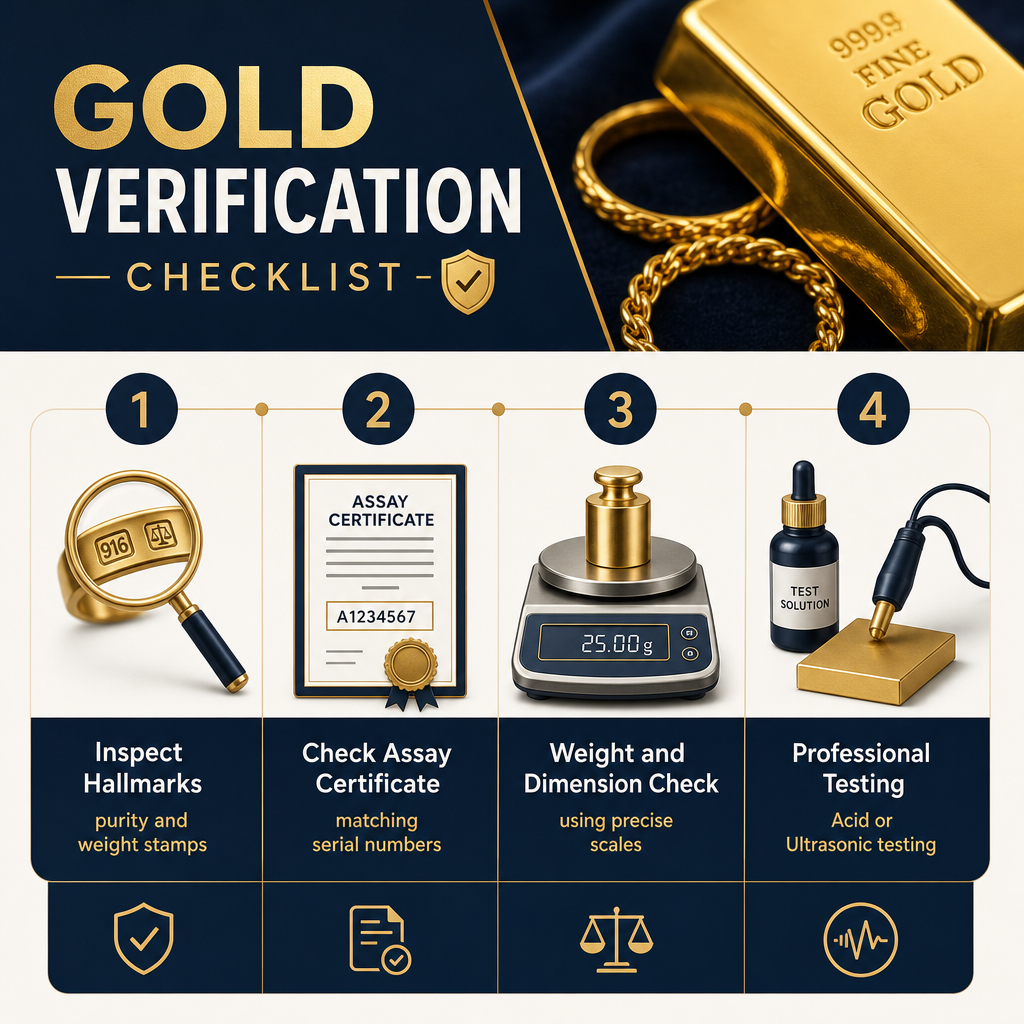
Counterfeit gold has become remarkably sophisticated, with tungsten-filled bars capable of mimicking the weight of real gold. You should never accept a delivery without a multi-point verification process.
1. Hallmark inspection
Every investment-grade bar should have a hallmark indicating its purity (e.g., .999 or .9999), the weight (e.g., 1 Troy Oz or 1kg), and the logo of the refinery. Cross-reference the refinery logo against the London Bullion Market Association (LBMA) Good Delivery List.
2. Assay certificates
Most modern bars are sold in tamper-evident “assay cards” that contain a certificate of authenticity and a serial number that matches the one stamped on the bar itself. If the card looks tampered with or the serial numbers don’t match, reject the shipment.
3. Physical testing
The Magnet Test: Gold is not magnetic. if your bar or coin sticks to a strong magnet, it is a fake.
The Ping Test: High-purity gold has a long, high-pitched “ring” when struck. Base metals produce a dull thud.
Ultrasonic Testing: For high-value bars, professional investors use ultrasonic thickness gauges to ensure the bar is gold all the way through and hasn’t been drilled and filled with tungsten.
Avoiding common gold scams
Scammers thrive on the “FOMO” (fear of missing out) that often accompanies record-high gold prices. Understanding their tactics is your best defense.
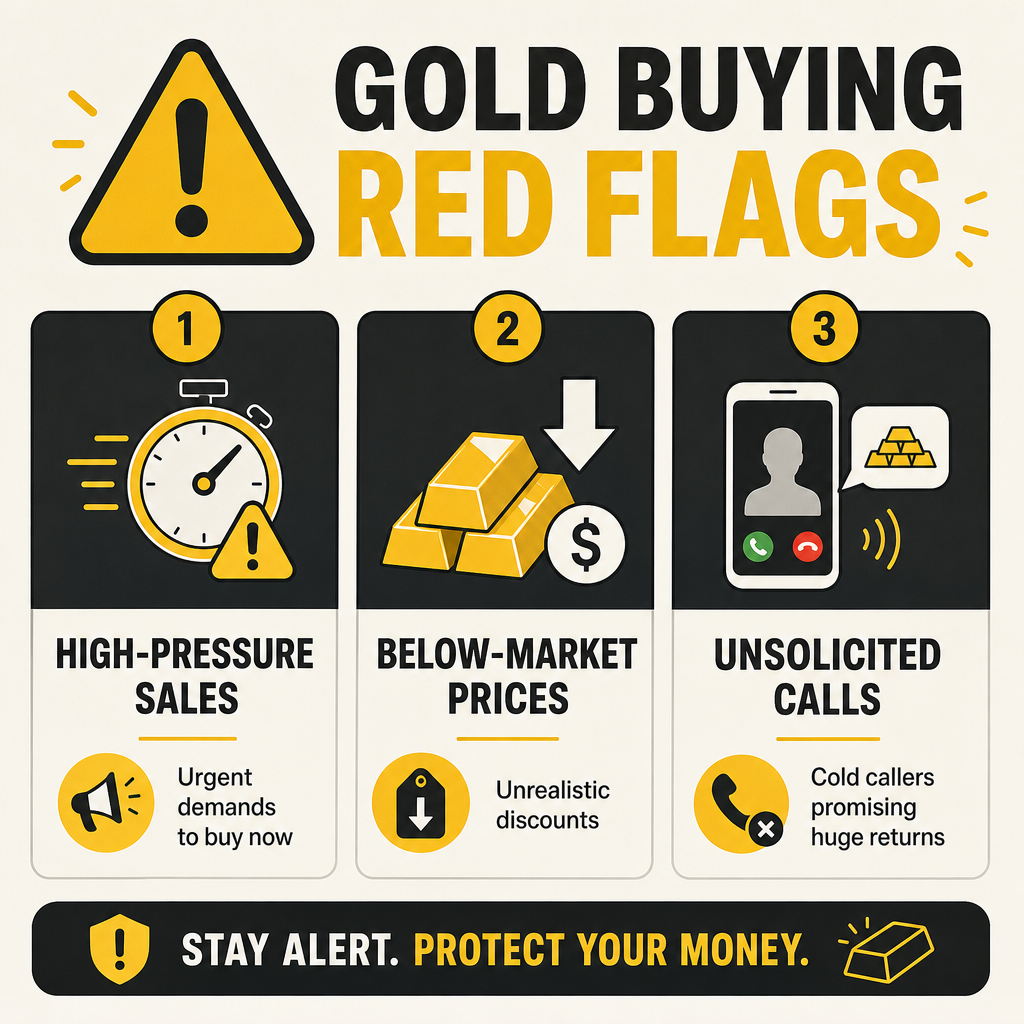
Below-Market Pricing: If a seller is offering gold below the current LBMA spot price, they are either selling fakes or running a “phantom” shop that will never ship.
The “Numismatic” Trap: Scammers often push “collectible” or “rare” coins with massive markups, claiming they will appreciate faster than bullion. For 99% of investors, raw bullion is a safer and more transparent play.
Cold Calls and High Pressure: Reputable dealers don’t need to cold-call you. If someone is pressuring you to “lock in” a price before it “skyrockets tomorrow,” hang up.
Secure storage and insurance
Once you’ve safely purchased your gold, the next challenge is keeping it. Your choice of storage determines both your peace of mind and your ability to liquidate the asset.
Home storage
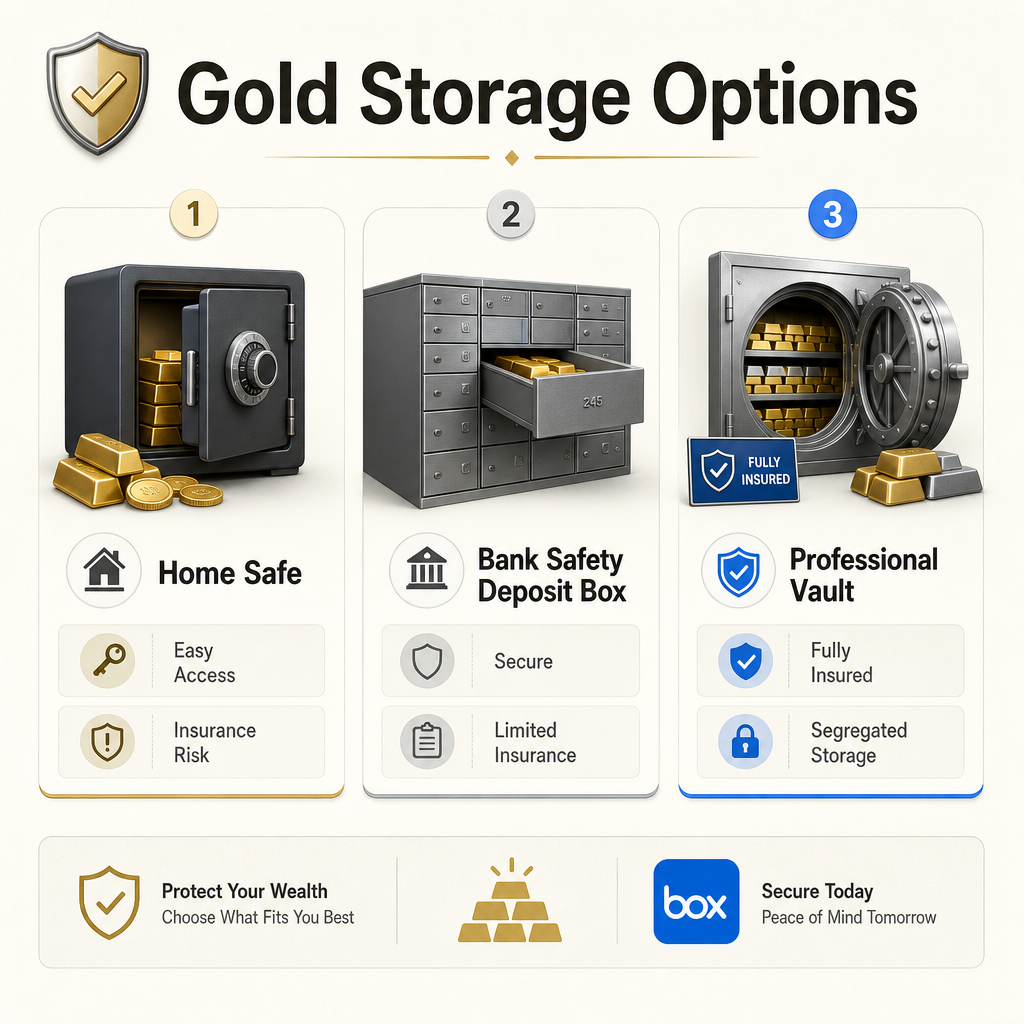
Keeping gold at home offers immediate access but significant risk. Most standard homeowner’s insurance policies have very low limits for precious metals (often as low as $2,500). You will need a high-security safe (bolted to the floor) and a specific insurance rider to cover the full value.
Professional vaulting
For larger holdings, third-party vaults like those operated by Brink’s or Loomis offer institutional-grade security. Look for allocated and segregated storage, which ensures your specific bars are kept separate from the vault’s other holdings and belong legally to you, not the vault operator.
Ethical and direct sourcing: a safer path
One of the most effective ways to ensure safety and authenticity is to shorten the supply chain. Much of the risk in the gold market comes from “middlemen” who may inadvertently (or intentionally) pass on diluted or conflict-sourced material.
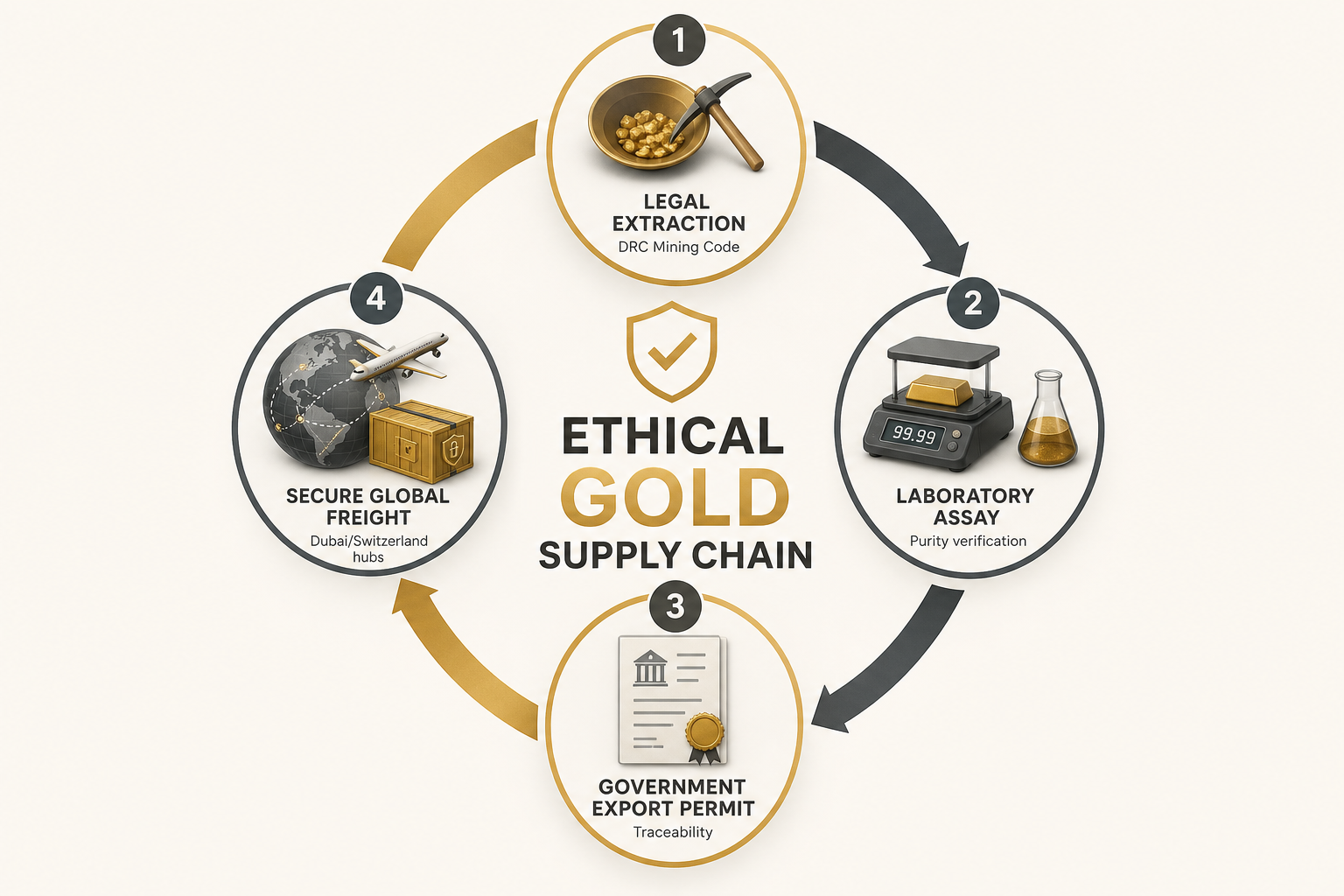
Direct sourcing hubs like Crown Ore Group provide a gateway for buyers to source gold directly from the richest mining regions in the Democratic Republic of Congo (DRC). By focusing on OECD-aligned sourcing and strict adherence to the 2018 Mining Code, these platforms remove the “grey market” uncertainty.
“Trust is the only currency that matters as much as the gold itself,” notes a report on African gold suppliers. By working with verified suppliers who provide full assay integrity and secure, insured logistics from the mine to the destination, wholesale buyers can achieve a level of transparency that’s often missing in traditional retail channels.
Try Crown Ore Group
If you are looking to source high-purity gold with full traceability and secure export support, Crown Ore Group is a premier gateway. Specializing in premium gold from the Congo’s Maniema, South Kivu, and Ituri regions, they provide a secure bridge for international refineries and industrial buyers.
Their process prioritizes full assay integrity and regulatory compliance, ensuring every batch is documented from extraction to delivery. Reach out to their team today to receive a professional quote and start your sourcing journey with a partner you can trust.