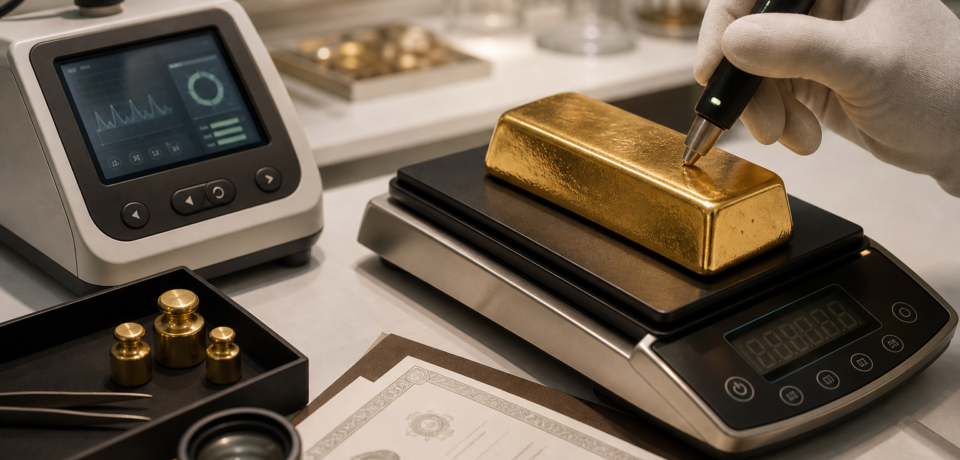
How to Verify Gold Before Buying: Testing Methods, Hallmarks & Trust
When investing in gold, authenticity is everything. A counterfeit bar doesn’t just cost you money-it undermines trust in your entire portfolio. Whether you’re buying from a dealer, a private seller, or a global supplier, knowing how to verify gold before your money changes hands is non-negotiable.
At Crown Ore Group, we’ve spent decades sourcing and supplying high-purity gold to buyers across 20+ countries. That trust didn’t come from promises alone-it came from radical transparency about where our gold comes from, how we process it, and exactly what purity we’re delivering. In this guide, we’ll walk you through the same verification methods we use internally to ensure every bar meets the standard our buyers expect.
Why Gold Verification Matters
Gold prices hit record highs in 2026, exceeding $5,000 per troy ounce. That price tag makes gold a target for counterfeiting. Tungsten, lead, and other base metals can be shaped into convincing fakes-and without verification, you won’t know until it’s too late.
Verification isn’t paranoia. It’s due diligence. A single counterfeit bar in a portfolio of ten breaks the entire portfolio’s integrity. That’s why serious investors-and the suppliers who serve them-make verification the first step, not an afterthought.
Hallmarks: What to Look For on the Gold
Every legitimate investment-grade gold bar carries identifying marks stamped directly into the metal. These hallmarks are your first line of defense.
Refinery Name or Logo: Trusted refineries like PAMP Suisse, Valcambi, or the Perth Mint are globally recognized for quality. If you don’t recognize the refinery name, research it before committing. Counterfeiters sometimes fake refinery stamps, but they usually misspell the name or use slightly off dimensions.
Purity or Fineness Marking: Investment-grade gold is stamped with purity levels like .999 (99.9% pure) or .9999 (99.99% pure). This is the single most important marking. Anything below .995 (99.5%) is not investment grade and carries significant resale friction.
Weight: Marked in troy ounces or grams. Verify this matches the bar’s actual weight using a calibrated scale.
Serial Number: Each bar typically carries a unique serial number used for tracking and verification. Write this down and keep it with your purchase documentation.
If hallmarks are smudged, misaligned, or missing, that’s a red flag. Quality bars have crisp, precise stamps.
Testing Methods: From Simple to Advanced
Not all tests require professional equipment. Here’s how to verify gold authenticity from most accessible to most sophisticated.
The Magnetic Test
Gold is diamagnetic-it’s not attracted to magnets. This is your simplest test.
How it works: Hold a strong magnet near your gold bar or coin. Real gold won’t stick or be pulled toward the magnet. If it does, the piece contains ferromagnetic metals (iron, nickel, cobalt) and is counterfeit or alloyed below standard.
Limitations: This test only detects magnetic metals. A tungsten core with a gold plating would pass. But it’s a fast first screen.
Weight and Dimension Check
Gold is extremely dense. Counterfeiters making bars from tungsten (which is close in density to gold) or lead (which is less dense) often can’t match both weight and dimensions perfectly.
How it works: Compare your bar against published specifications from the refinery. A bar that’s the correct weight but slightly larger or smaller than specifications suggests internal substitution. Use a digital scale accurate to at least 0.1 grams and calipers for dimensions.
When to use this: When you can’t access advanced testing but want more confidence than just a magnet.
Acid Testing (Chemical Test)
Nitric acid reacts differently to pure gold versus alloys. This is a classic jeweler’s test, but it requires care-nitric acid is corrosive.
How it works: A certified assayer or jeweler will make a small scratch on the gold and apply nitric acid. The reaction (or lack thereof) indicates purity. A genuine gold bar will show minimal reaction; base metals will dissolve or discolor.
Limitations: This test damages the bar slightly and requires expertise to interpret correctly. Only professional assayers should perform this.
When to use this: When buying from a jeweler or dealer who can perform the test on-site, or when you’re verifying a piece with unclear provenance.
X-Ray Fluorescence (XRF) Testing
XRF is the gold standard for non-destructive testing. A handheld XRF device shoots X-rays into the metal and reads back the elemental composition, revealing purity and any internal core substitution.
How it works: The XRF device is held against the bar for a few seconds. It returns a precise purity reading and can detect tungsten cores that would fool other tests.
Advantages: Non-destructive, fast, and highly accurate. Professional dealers and refineries use XRF routinely.
Limitations: Equipment costs $10,000–$50,000, so you’ll need to bring the gold to a dealer or assayer who owns one. Not available everywhere.
When to use this: For significant purchases ($10,000+) or when you need absolute certainty. Many reputable dealers will run XRF as part of their standard verification process.
Ultrasound Testing
Advanced ultrasound equipment can detect density inconsistencies inside the bar without damaging it. A tungsten or lead core creates a different sound signature than solid gold.
How it works: Similar to XRF, this is performed by specialists with expensive equipment. The device “listens” to ultrasound waves bouncing through the gold and reveals internal structure.
Advantages: Non-destructive and highly accurate, especially at catching tungsten-core fakes.
Limitations: Rare and expensive. Only major refineries and high-end dealers have the equipment.
When to use this: When buying very large quantities or when other tests raise questions.
Assay Certificates: The Paper Trail
An assay certificate is a formal document from a certified assayer stating the gold’s purity, weight, and origin. It’s not optional for serious buyers-it’s mandatory.
Most reputable dealers sell gold in “assay cards”-sealed plastic packages with the certificate printed inside. The seal ensures the gold hasn’t been tampered with after testing. The certificate is signed by the assayer, making it legally defensible if questions arise later.
What to check on a certificate:
Assayer’s credentials: The assayer should be registered with a recognized body (like the LBMA, the London Bullion Market Association).
Refinery identification: The bar’s refinery should match the hallmark.
Weight and purity: Must match the physical hallmarks.
Date and signature: Ensures the test was recent and certified.
Seal condition: If buying an assay-carded bar, the seal must be intact.
If a gold bar doesn’t come with an assay certificate, negotiate hard for one. If the seller refuses, walk away. The willingness to certify is a marker of legitimate dealing.
Working with Trusted Suppliers: The Crown Ore Approach
The single best defense against counterfeits is buying from a supplier with reputation and accountability. That’s where we come in.
At Crown Ore Group, every kilogram of gold we export comes with full documentation: a Certificate of Origin proving where the gold was mined, an assay report confirming purity, and proof of compliance with international standards like the OECD Due Diligence Guidance and the ICGLR Regional Certification Mechanism. We don’t just sell gold-we sell trust built on transparency.
When evaluating any supplier:
Check regulatory compliance: Are they registered with the National Futures Association (NFA) or equivalent body in your region? Do they publish compliance documents?
Verify certifications: Look for LBMA accreditation or ISO 9001 certification, which indicate the supplier has undergone independent audits of their processes and purity standards.
Read reviews: Check the Better Business Bureau (BBB) for ratings and complaint history. Multiple complaints about counterfeit gold are disqualifying.
Ask for references: Established suppliers can point to institutional buyers, refineries, or other dealers who’ve worked with them. Call those references.
Review their sourcing: Do they publish sourcing information? At Crown Ore, we’re transparent about our operations in 20+ countries and our commitment to the DRC’s 2018 Mining Code. That transparency lets you feel confident about where your gold actually comes from.
Red Flags: When to Walk Away
Some warning signs are absolute deal-breakers:
No assay certificate available: If a seller won’t provide one, they’re either hiding something or operating without professional standards. Neither is acceptable.
“Collectible” or “numismatic” markups: Some dealers sell rare coins at huge premiums over spot price. That’s a different asset class (numismatics) and not investment gold. Be clear on what you’re buying.
Pressure to buy quickly: Legitimate dealers don’t rush you. High-pressure sales tactics (“I only have one more at this price”) are classic scam markers.
Vague sourcing: If a dealer can’t explain where the gold came from or won’t discuss supply chain details, move on. Ethical sourcing isn’t optional.
Prices far below market rate: If the price seems too good to be true, it is. Spot gold prices are public; anyone charging significantly below them is either desperate or selling something other than what they claim.
No physical inspection option: Insist on seeing the gold in person (or having a trusted third party inspect it) before finalizing any large purchase. Video calls and photos aren’t enough.
Storage and Insurance: Protecting Your Verified Gold
Once you’ve verified your gold and brought it home, protect it. Most buyers store gold in one of two ways:
Home safes: Requires a high-quality safe (UL TL-30 rating or higher) and specialized insurance. Your homeowner’s policy usually won’t cover precious metals stored at home-you’ll need a rider. Upside: immediate access. Downside: security and insurance costs.
Professional vaults: Companies like Brink’s, Loomis, and Malca-Amit offer allocated and segregated storage with full insurance. Upside: Fort Knox-level security and comprehensive insurance. Downside: ongoing storage fees and less immediate access.
Document your gold’s serial numbers, assay certificate, and storage location. This documentation is as valuable as the gold itself if you ever need to prove ownership or file an insurance claim.
Try Crown Ore Group
If you’re ready to buy verified, ethically sourced gold with full transparency, Crown Ore Group supplies 24K gold bullion, gold dore bars, and raw gold nuggets to buyers worldwide. Every bar comes with an assay certificate and full sourcing documentation. We’ve been building trust through transparency for decades-reach out to learn more about our global supply and expert consulting services.
Frequently Asked Questions
What’s the easiest way to verify gold authenticity at home?
The magnetic test is the simplest: real gold is not magnetic, so if a magnet sticks to your gold bar or coin, it contains base metals or is counterfeit. For a more thorough check without damaging the gold, weight and dimension verification works well-compare your piece against known specifications, as tungsten and lead counterfeits rarely match exact dimensions. Both are free and require no special equipment.
Should I get an assay certificate for every gold purchase?
Yes, especially for significant purchases. An assay certificate from a certified assayer provides official proof of purity and origin. Most reputable dealers include assay cards-sealed plastic packages with a signed certificate-when selling investment-grade gold bars. Certificates are essential if you ever resell the gold, as they dramatically increase buyer confidence and reduce friction in transactions.
What purity level should investment-grade gold be?
Investment-grade bullion should be at least 99.5% pure (marked as .995 or higher fineness). Most dealers supply 99.9% pure (.999) or 99.99% pure (.9999) bars, which meet international standards acceptable to refineries and major buyers like those we work with at Crown Ore Group. Lower purity introduces more base metals and reduces resale value.
Can I trust online gold sellers, or should I only buy in person?
Reputable online sellers can be trusted, but verify their credentials first. Look for BBB ratings, NFA registration, and established track records. When buying online, insist on assay certificates and purchase insurance that covers loss or damage in transit. In-person purchases are lower-risk because you can inspect the gold before handing over funds, but they require finding a trusted local dealer.
What is the difference between hallmarks and assay certificates?
A hallmark is the stamp on the gold itself-showing the refinery name, weight, and purity marking (e.g., .999). An assay certificate is a separate document from a certified assayer confirming the bar’s exact purity through lab testing. Hallmarks show what the manufacturer claims; certificates prove what the metal actually is. Together, they form the foundation of authenticity.
“Learn how to authenticate gold bars and bullion. Test methods, assay certificates, and what to look for when buying from trusted suppliers.”
Emma Smithson
Gold Price Today: What’s Driving the Market and Why It Matters
- crownoregroup
- July 26, 2024
Safe Gold Investment: A Buyer’s Guide to Protecting Your Wealth
- crownoregroup
- July 26, 2024